Monday, February 25, 2013

CNU Writers Conference -- A Nourishing Two Days

This past weekend (Feb. 22-23, 2013) I attended Christopher Newport University’s annual Writers Conference--the 32nd, in fact. This one honored my dear friend and wonderful writer Doris Gwaltney, author of HOMEFRONT. See Doris’ Facebook page. Doris Gwaltney became coordinator of the conference in its fifth year and served in that capacity for eight years. She teaches a Lifelong Learning class in creative writing, and has been a mentor and inspiration to many local writers. She also serves on the Advisory Council for the CNU Writers Conference.

I always find this writers conference nourishing, and this year’s was no exception. Humans rights was the theme of the conference and the opening day’s panel discussed human rights issues, including rape, violence against women and children, and human trafficking in sexual and other forms of slavery.

Novelist and attorney Corban Addison gave an outstanding presentation about his novel, A WALK ACROSS THE SUN, and his involvement with international justice movements to combat human trafficking, which he called “the fastest growing criminal industry in the world.” Trafficking for sexual and other forms of slavery is not just something that happens in other countries. Addison pointed out that in the United States some 100,000 American children are trafficked every year. “It’s as easy to order a girl on the Internet as it is to order a pizza.,” he said, adding that “We spend more on military marching bands than on liberating slaves.” Globally about 2 million children are trafficked every year. The average American sex buyer is male, as are sex tourists that go to Thailand, which is known for an active sex trade in young girls. Until the grassroots rises and demands an end to this kind of slavery, “dollars will continue to fuel the trade,” Addison said. He advocated an educational campaign on human trafficking similar to drug trafficking education.

Rosemary Trible, wife of CNU President Paul Trible, talked about her book, FEAR TO FREEDOM, about her rape experience when she was in her twenties. Since then she has become an advocate for rape victims and founded the nonprofit organization, Fear 2 Freedom, which provides aid to victims of sexual abuse. “I don’t believe anybody eight-years-old says, ‘I’d like to be a prostitute when I grow up,’” Trible said.

Tina Kempin Reuter, CNU assistant professor of international politics and law, presented the policy angle on human rights, pointing out that the concept of human rights is only about 70 years old, and because of communications technology, more people than ever before are aware of human trafficking. With increased awareness, there is a greater chance that more laws against this practice will be passed and implemented.

In a panel on “The Facts about Fiction,” novelist Michael Farmer said a writer needs to know three things: the truth, the subject and the trade. A writer of Western novels, Farmer described the rigorous research that goes into each of his books and the need for authentic details to bring a story alive. Farmer is a member of the Isle of Wight, Virginia, writers group. His novel, HOMBRECITO’S WAR, was a 2006 Spur Finalist and a 2007 New Mexico Finalist for Best Historical Fiction. Other members of this panel were mystery writer Maria Hudgins and poet Nathan Richardson.

Saturday’s keynote speaker Lucinda Roy, Alumni Distinguished Professor at Virginia Tech University, talked about her memoir, NO RIGHT TO REMAIN SILENT, about the 2007 shooting that killed 32 people and wounded 17 others at Tech. Roy had taught the student, Seung-Hui Cho, who opened fire on students and faculty and then killed himself. She said she had recognized he was a troubled kid and tried to obtain some help for him but none was forthcoming. The experience, which affected her deeply, is the subject of her memoir.

Steve Watkins, author of the novels DOWN SAND MOUNTAIN (winner of the 2009 Golden Kite Award for Fiction) and WHAT COMES AFTER, presented a lively, humorous discussion on “Why Write YA.” Books for this age group -- 14 up -- find a ready market that continually renews itself as children from the middle grade readership grow up the literary ladder. Watkins pointed out that girls are the primary readers of fiction in the YA category and that they like to read books in which the protagonist is at least one year older than they are. YA novels these days deal with adult topics, including rape, pregnancy, drugs, crime, homelessness, etc., and many are read by adults.

There were many other fine panels and presenters but impossible to attend them all. It’s always refreshing to mingle with other writers, listen to accomplished authors talk about how they work and reenergize the creative batteries for the projects at hand and those on the drawing board.

Congratulations to Cindy Halliday, Conference Coordinator, poet Ann Falcone Shalaski, President of the Advisory Council for the CNU Writers Conference, Joanne Dingus, and all the other council members and those from the Lifelong Learning Society who were involved in organizing this wonderful conference.

Monday, January 21, 2013

Interview

I am honored to be featured on Morgen Bailey's wonderful Writing Blog. A great blog for writers to follow.

Wednesday, November 14, 2012

50 GREAT WRITERS YOU SHOULD BE READING

I made it into the Authors Show 2012 edition of 50 GREAT WRITERS YOU SHOULD BE READING. Thanks to everyone who voted for me.

Monday, November 12, 2012

Climate Change is the Greatest Threat to Life on Earth

Today's EXPLORING NATURE podcast was devoted to climate change. Hurricane Sandy brought this issue to the fore. There is no more urgent issue than climate change. Worry about whether Iran develops a nuclear weapon pales next to climate change, which will have devastating consequences for the entire planet if governments don't address it. The two governments that most urgently need to address climate change are the United States and China. Yet we have some politicians and the fossil fuel industries that refuse to recognize the seriousness of climate change. They are stuck in denial and in an anti-science attitude that endangers all life on Earth.

The science and signs of climate change are out there. The scientific community has been in agreement about climate change for some 40 years. The changes are accumulating rapidly, more rapidly than originally predicted. According to the U.S. Environmental Protection Agency, 2000 to 2009 was the warmest decade ever recorded. If people keep on adding greenhouse gases into the atmosphere at the current rate, the average temperature around the world could increase by 4 to 12 degrees Fahrenheit by the year 2100.

Increased temperature affects the oceans, weather patterns, snow, ice, plants and animals, including people. As the top layer of the ocean gets warmer, hurricanes and other tropical storms grow stronger with faster winds and heavier rain. That's what we saw with Sandy.

Since the 1980s, the U.S. has experienced more intense single-day storms that are dumping a lot more rain or snow than usual.

In the past century, there has been about a foot of sea level rise in the New York City area, and this figured in hurricane Sandy with the storm surge added to the normal tidal surge, producing devastating flooding for New York and New Jersey.

Melting sea ice is also a factor and will continue to be a factor in the world's coastal areas where so many large cities are located. Arctic sea ice reached its lowest seasonal minimum since satellite data began to be kept in 1979.

Summer 2012 was the third hottest on record.

The trends of wilder weather and greater temperature extremes are expected to continue. Exactly what climate scientists have been predicting for more than 20 years is happening. Everyone needs to pay attention and pressure their governments to do something about it while we still can.

Tuesday, October 30, 2012

Rape is not a Religious Ritual

Rape is the topic of my latest podcast, EXPLORING NATURE. Rape is not a pretty topic. It's downright ugly and the politics of rape are uglier than I've ever seen them in my lifetime. Rape victims are under attack again. I say again because for centuries there was a blame-the-woman attitude toward rape, as if rape was not something to take seriously--just some "boys-will-be-boys" fun. Women somehow brought on rape by dressing seductively or by inviting intercourse and then lying about it to trap some poor unfortunate man. The man was the victim. When rape began to be taken seriously as a crime, it was seen as a property crime against the husband or the father. It was his property, not the woman victim, that suffered the attack. The raped woman was "damaged goods."

It took many decades for rape to be defined as a violent crime against the victim. The World Health Organization defines rape as "physically forced or otherwise coerced penetration--even if slight--of the vulva or anus, using a penis, other body parts or an object." The FBI's definition, as of 2012, is "The penetration, no matter how slight, of the vagina or anus with any body part or object, or oral penetration by a sex organ of another person, without the consent of the victim."

Rape is a crime of violence but this fact seems to have been lost on a group of Republican male legislators whose goal is to deny women victims access to abortion for any cause. Displaying ignorance of women's anatomy and science, and a stunning callousness toward rape victims, these legislators are more concerned about the rapist's sperm investment than the woman's violation. They downgrade the seriousness of rape by parsing "forcible rape," "legitimate rape," and pregnancy from rape as a gift of God. But rape is rape. There is no acceptable rape and no holy rape.

Most recently, Richard Mourdock, Indiana Republican running for the Senate, made the astounding statement that pregnancy resulting from rape is, "something God intended to happen . . . a gift from God." This statement is one of the most offensive remarks about rape I have ever heard. It implies a theory of divine rape. Mr. Murdock's view would open the door for a rapist to defend himself by arguing that he was just carrying out God's will.

Then there was Todd Akin, Republican congressman from Missouri, coining the term "legitimate rape," and displaying his ignorance of science by proclaiming that a woman's body could "shut down" pregnancy resulting from rape.

Murdock and Akin are extremists but they aren't alone. Vice Presidential candidate Paul Ryan is on the record saying rape is just another method of conception and not a reason to allow abortion. About a dozen Republican Senate candidates oppose abortion for rape, incest or to protect the health of the mother. Republican Presidential candidate Mitt Romney has said he would like to see Roe v. Wade overturned.

There are several things to note about these efforts to turn back the clock on rape victims. First, these men constitute an anti-abortion Mafia. Their extreme view on pregnancy from rape are part and parcel of a general war on women being waged primarily by Republican men. Secondly, they don't talk about rape as a violent crime. By their statements and the bills they sponsor, they are more interested in protecting a fertilized egg than in protecting women from rape. What they end up protecting is the rapist.

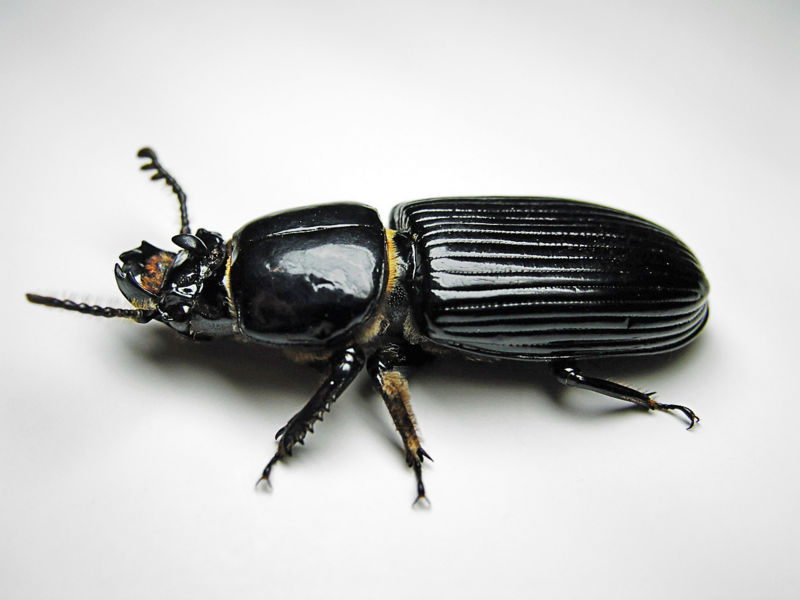
Every year in the United States, between 25,000 and 32,000 pregnancies result from rape. Mr. Akin needs some medical instruction about women's bodies. There is no mechanism for "shutting down" pregnancy from rape. Perhaps Mr. Akin is more familiar with the bodies of some female insects than with women's bodies. Female tenebrionid beetles of the species Pterostichus Lucublandus produce a kind of chemical mace that they use not only against predators but also against unwanted males. This spray is so disabling that even after the male cleans himself, he falls into a kind of coma for several hours, giving her time to get away. Of course, the female pays a price for this defense. Until she can resynthesize her supply of defensive spray, she is vulnerable to predators.

Women are vulnerable to predatory men. The worst predators currently are the male legislators who are passing laws and sponsoring bills that have the intent of controlling women's bodies and denying women autonomy over their reproductive biology. The remarks of Mourdock, Akin and Ryan display contempt for women and should be unacceptable to any sane person.

Hear more by listening to the podcast. Also see my book, Sexual Strategies: How Females Choose Their Mates, which has an entire chapter on how males across the animal kingdom try to subvert female choice.

Monday, October 22, 2012

War: The Culture of Death - Part II

Today's podcast, EXPLORING NATURE, presents Part II of the discussion about war as the culture of death for the human species, the environment and the planet. Unlike the Stone Age, when people hurled stones at each other and had no weapons of mass destruction nor any concept of a global ecosystem, violent conflict was a local head-bashing between neighboring tribes. Today's techno-warfare with remotely controlled drones, missiles and bombs threatens all life on Earth. Yet humans use these weapons as if they were living in the Stone Age, and that is the most dangerous aspect of warfare today. The humans who promote war as the only way to resolve conflicts, who substitute bombs for brains, are using Stone Age behavior with Space Age weapons. This disconnect between behavior and technology imperils the planet and the survival of the human species. Given the awesome destructive power of modern weapons, war should be declared obsolete by all nations on Earth.

Monday, October 15, 2012

War - The Culture of Death

Today on my podcast, EXPLORING NATURE, I'll be talking about war in the context of environmental degradation.

Imagine the puzzlement of intelligent beings from another planet as they approach Earth. Descending through Earth’s dense atmosphere, the ship’s sophisticated sensors whirr with incoming data. The readings are bizarre: millions of acres of land littered with explosive devices; landscapes pockmarked by bomb craters; radioactive materials polluting bodies of water both large and small; toxic chemicals poisoning soils; carbon dioxide clogging the air, building up heat around the planet. Incredibly, the planet appears to be a toxic waste dump. These intelligent aliens might well wonder what kind of crazed animal wreaks such damage on an otherwise beautiful planet, one that seems so suitable for life. They might be even more surprised to learn that the damage was and continues to be done by the species considered the most intelligent on Earth – Homo sapiens.

Why does a species with such a short lifespan spend so many of its precious years making life as miserable as possible, even hastening death for so many of its own kind? One might conclude that they are possessed by such a deep hatred for life that they are willing to attack and poison the only known planet that sustains and nourishes them.

Whatever the pathology in the wiring of some human brains – inexplicably those in the heads of men likely to be leaders of countries – it has invented a monstrous self-deception that war and national security are inseparably linked. In pursuit of this illusion, governments spend most of their economic and human resources manufacturing, selling and buying weapons of destruction that not only increase insecurity but threaten all life on the planet.. Back on October 28, 2002, the first observance of the International Day for Preventing Exploitation of the Environment in War and Armed Conflict, then UN Secretary-General Kofi Annan, said: “War not only causes human suffering. It can also be devastating to the environment. Long after peace has been restored, the negative environmental impacts of conflict often remain.”

War is hell on Earth. Environmental destruction is a strategy of war. There is hardly any environment on the planet that has not been scarred, scorched, poisoned, mined, radiated or otherwise brutalized by war. The world’s armed forces are the single biggest polluters of the planet. According to the Science for Peace Institute at the University of Toronto, Canada, 10 to 30 percent of all global environmental degradation is a direct result of military actions (Ref. 1). Eleven nuclear reactors and at least 50 nuclear warheads sit on the ocean floor. Mines and unexploded ordnance lie in wait in some 90 countries. According to the International Commission of the Red Cross, 100 million land mines are scattered around the world where they kill or maim between 1,000 and 2,000 people, mostly children, every month. After more than 23 years of war, Afghanistan is one of the most heavily mined countries in the world, its once dense forests and much of its farmland have been destroyed, and rare species of birds and mammals, such as snow leopards, gazelles, bears, and wolves, are endangered.

In Iraq, 12 years of U.S. invasion and occupation have left that country crippled, tens of thousands of Iraqi civilians dead, homes, schools, hospitals, electrical and sanitation systems destroyed, some some 2 to 4 million refugees, depending on whose figures you use. Iraquis’ air, soil, water, blood and gene pool have been contaminated with depleted uranium, resulting in birth defects and cancers. And the environment is littered with unexploded cluster bombs.

The Vietnam war has been called “an unprecedented assault on the environment.” Ten percent of southern Vietnam’s tropical forests, including one-third of its coastal mangroves were destroyed by herbicides. Mangroves play a vital role in coastal ecology and provide a rich source of food that sustains fish populations. Over the course of 13 years, from 1961 to 1974, Vietnam was repeatedly hit by cluster bomb units (CBUs), affectionately called “bomblets,” large bombs, napam, land mines, and toxic chemicals. The country’s soils, water systems, biological diversity, and even its climate were affected. During the course of the war, the United States admitted it dropped 72 million liters of chemicals on Vietnam, most of it Agent Orange. This highly toxic agent contained the most dangerous type of dioxin called TCDD, which stands for 2, 3, 7, 8 tetrachlorodibenzo-para-dioxin. Known to cause almost every kind of cancer, TCDD spread throughout Vietnam’s drinking water and soils and entered the food chain. From there, the toxic chemical got into the blood of animals, including humans, where it entered the germ cells, subverted DNA, the basic molecule of life, and caused mutations – babies born with two heads, fingers and toes that drop off, strange limbs, and retarded growth. Both human and environmental effects will continue long into the future.

The most devastating assault on humanity, one that launched the horror of nuclear war, occurred in August 6, 1945, when the United States dropped the first atomic bomb, nicknamed “Little Boy,” on the Japanese city of Hiroshima. Watching the mushroom cloud boiling up from what had been a city filled with life, Colonel Paul Tibbets, the pilot of the B-29 airplane that dropped the bomb, wrote in his journal: “My God, what have we done?” The heat, air pressure, and radiation from the explosion made it seem as if a sun had exploded. Within seconds, people, buildings, plants, and all animal life within a 1.5-mile radius was vaporized. For months and years to come, people exposed to the radiation died – more than 140,000 by the end of 1945. An estimated total of 200,000 people are believed to have died as a result of the bomb.

Three days later, on August 9, 1945, the United States dropped a second atomic bomb, this one on the city of Nagasaki. Approximately 70,000 people died by the end of 1945 as a result of this bomb, nicknamed “Fat Man.”

One might have thought that the horror, suffering, death, and devastation caused by these two bombs would have been enough for governments to take immediate action to outlaw such weapons. Instead, it triggered a nuclear arms build-up, known as the Cold War, between the United States and the former Soviet Union that continues to threaten the entire planet even though the Cold War has ended. The activities of producing these deadly weapons and the disposal of the waste by-products have created entire areas of the planet that are now radioactive.

Learn more on the podcast.